Articles
Why skateboarding is one of the best things you can do for your child
If you'd told most parents a decade ago that a skatepark was one of the safest, most developmental places they could take their child, they'd have laughed. That image is outdated — and the research tells a very different story.
Sport reduces risk — it doesn't create it
One of the most well-documented findings in child development is simple: children who are regularly involved in structured sport are significantly less likely to engage in risky or harmful behaviours as they get older.
Regular sport gives children a routine, a focus, and a community. It replaces boredom — which is where most risk actually lives — with purpose.
Skateboarding is particularly good at this. It's absorbing. Once a child catches the bug, they want to come back. They want to get better. That intrinsic motivation is hard to manufacture and incredibly valuable.
Safe environments and the power of routine
Indoor skateparks like The Skate Farm aren't the wild, unsupervised spots of popular imagination. They're structured, staffed environments with clear rules, safety equipment requirements, and a culture built around looking out for each other.
Sessions run on a timetable. Kids know when they're coming, what to expect, and what's expected of them. That predictability matters — routine is one of the strongest protective factors in a child's development.
For many kids, the skatepark becomes their place. The thing they look forward to all week. That kind of consistent, positive anchor is genuinely good for children's mental health.
Mentorship and positive role models
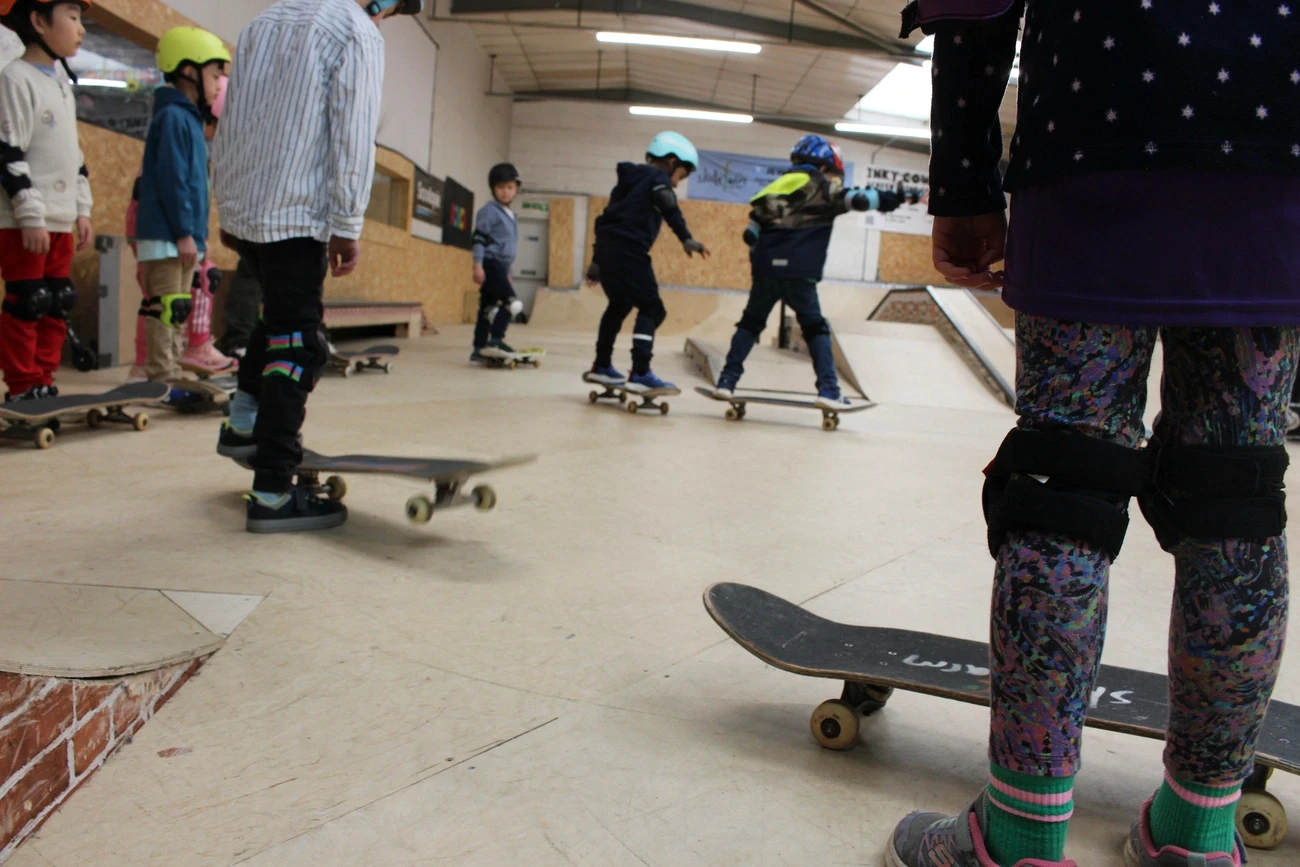
Something happens at a skatepark that doesn't happen in most other environments: older, more experienced riders naturally help younger ones. It's part of the culture. Nobody is asked to do it. It just happens.
Children who skate regularly are exposed to older peers and adults who model persistence, creativity, and resilience. They see someone fall, get up, and try again — dozens of times in a single session. They learn that failure is just part of the process.
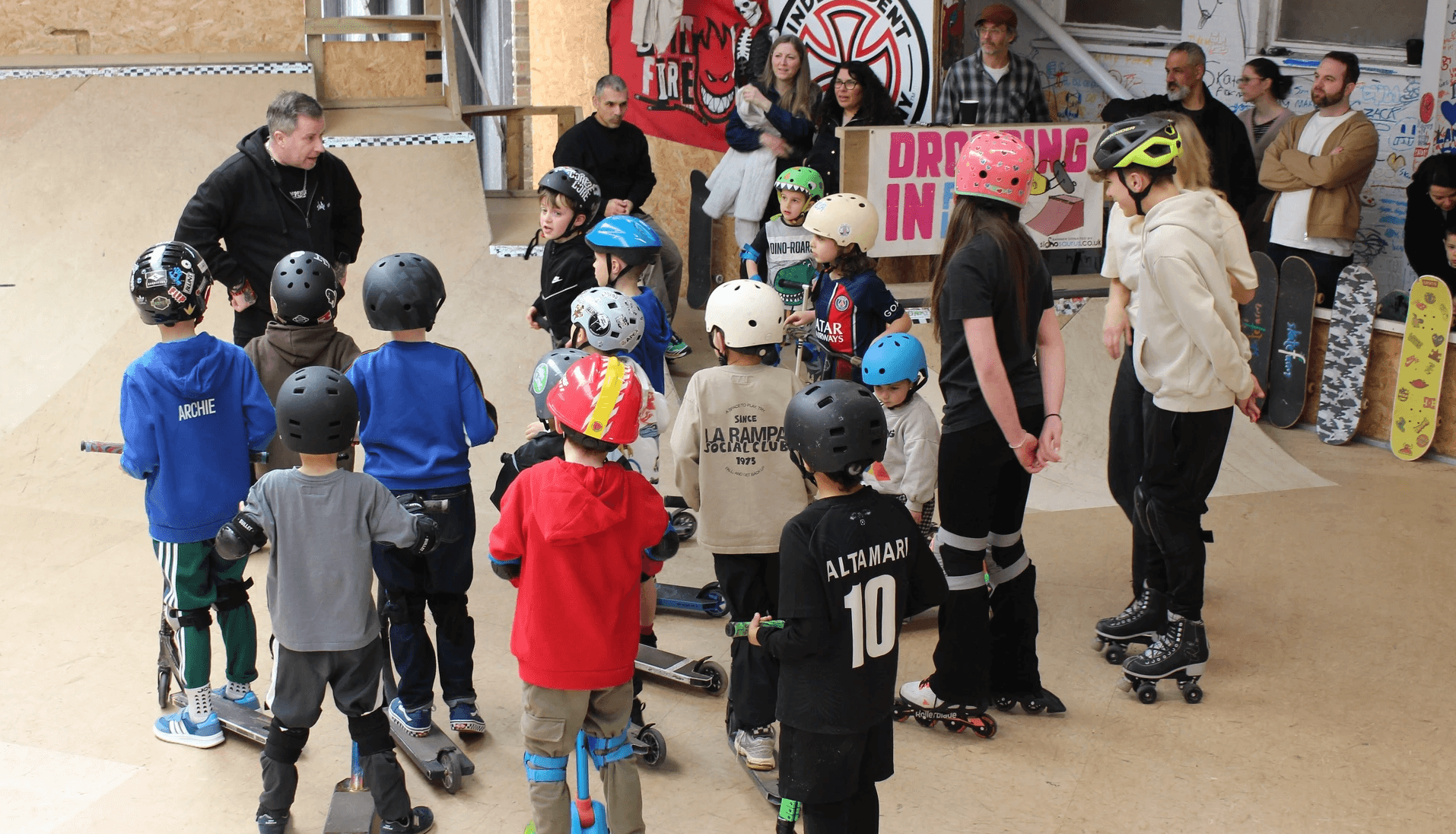
Our coaching sessions build on this with structured mentorship from experienced riders who know how to build confidence in younger beginners. But even in open sessions, the culture does a lot of the work on its own.
Positive risk-taking — and why it matters
Here's a slightly counterintuitive one: skateboarding teaches children how to take risks well.
Healthy risk-taking — trying something new, pushing your limits, accepting that you might not get it first time — is a skill. Children who never experience manageable risk struggle when they encounter it later in life.
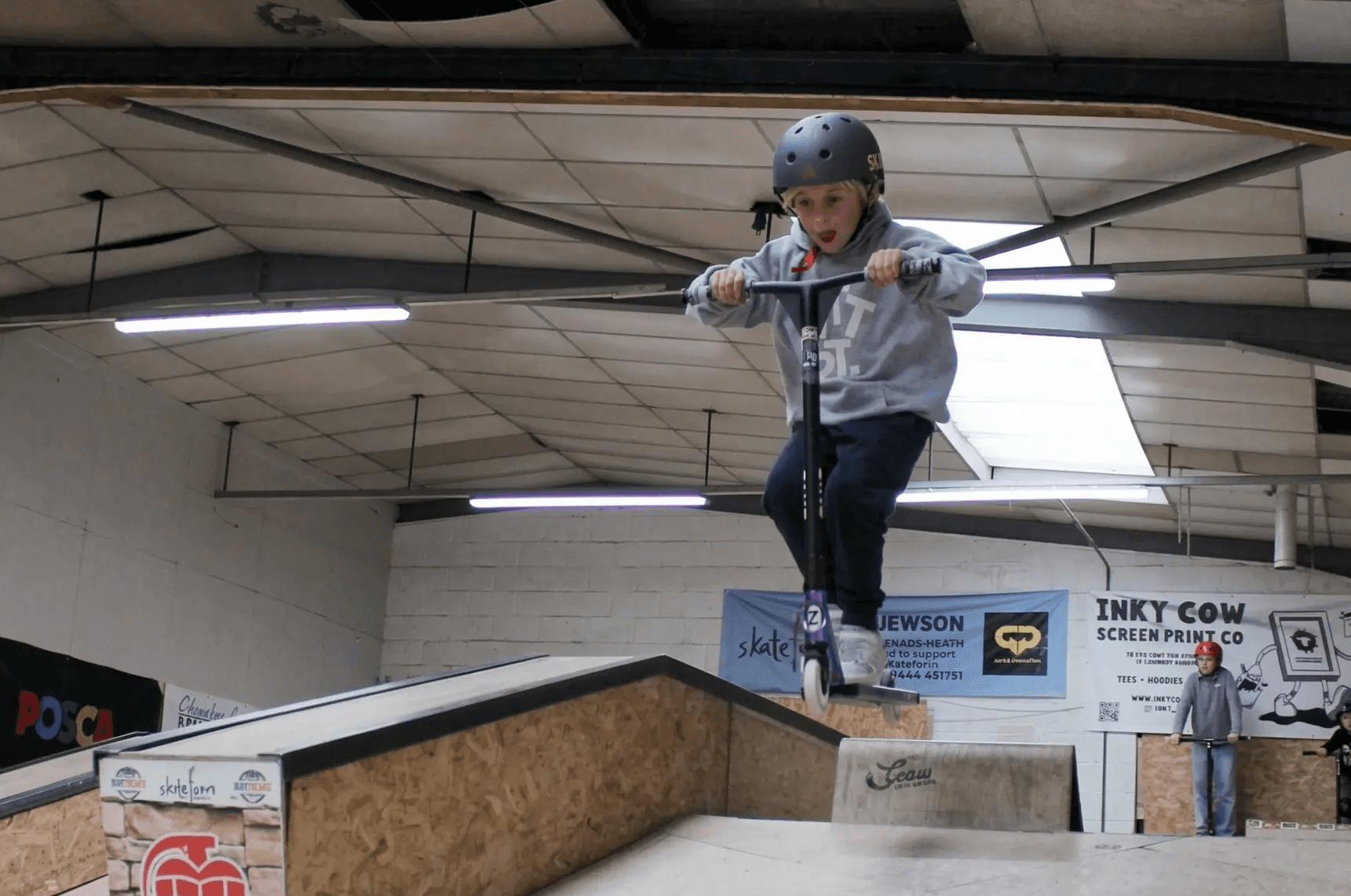
Skateboarding provides exactly the right kind of challenge. The risks are real enough to feel meaningful, but contained enough to be safe. A child learning to drop into a ramp for the first time is learning to manage fear, to commit to a decision, and to handle the outcome — whatever it is. That's not reckless. That's development.
Life skills and resilience
Ask any adult who skated as a child what it taught them. You'll hear the same answers: persistence, problem-solving, how to handle failure without falling apart.
Skateboarding has no shortcuts. You cannot fake your way through learning to ollie. You either practise until you get it, or you don't. That direct feedback loop — try, fail, adjust, try again — builds genuine resilience in a way that few other activities can.
Children who skate learn how to learn. They understand that progress isn't linear, that frustration is normal, and that landing a trick after twenty attempts is worth every fall that came before it.
A sense of belonging
Perhaps the most underrated benefit of skateboarding is the community it creates.
The skatepark is one of the few places where children of different ages, backgrounds, and abilities genuinely mix — and where older kids actively want to help younger ones. Status is earned through attitude and effort, not appearance or social hierarchy. That's rare.
For children who struggle to find their people — who don't fit neatly into a football team or a netball squad — the skatepark often becomes the first place they've ever felt like they belong.
We see it at The Skate Farm regularly. Children who arrive nervous and quiet on their first session, and within a few weeks are some of the most engaged, confident kids in the building. That change doesn't happen because of the ramps. It happens because of the people around them.
Ready to give it a go?
Our sessions are open to all ages and abilities — no experience needed, and helmets are available to borrow if you don't have one yet. We also run structured lessons for children who want to learn with proper coaching from the start.
Whatever works best for your child, there's a way in.

By signing up, you agree to our Privacy Policy.
Our newsletter includes ~monthly updates, events & early access.